Road tar does not respond to a bucket of soapy water. If you have been scrubbing at those black, rock-hard splatter spots with your wash mitt and getting nowhere, there is a reason. Standard car shampoos are alkaline. Tar is non-polar. They simply do not interact. Pushing harder only risks scratching your clear coat.
This article gives you the exact chemical logic, the right solvent choices, and a step-by-step process to pull hardened tar off your paint safely — without stripping your wax, burning your clear coat, or leaving residue behind.
Key Takeaways
- Road tar is a viscous petroleum byproduct that is chemically immune to alkaline soaps. Only non-polar solvents — refined petroleum distillates or concentrated d-Limonene — break its molecular bond with the paint surface.
- The correct dwell time is 60–90 seconds. Leaving solvent on clear coat longer than necessary increases the risk of chemical etching, especially on soft single-stage or older paint systems.
- Mechanical force is almost never needed. When you use the right solvent at the right concentration, the tar binder dissolves and wipes away cleanly. Scrubbing is a sign you are using the wrong product or not waiting long enough.
Why Road Tar Bonds So Aggressively to Paint
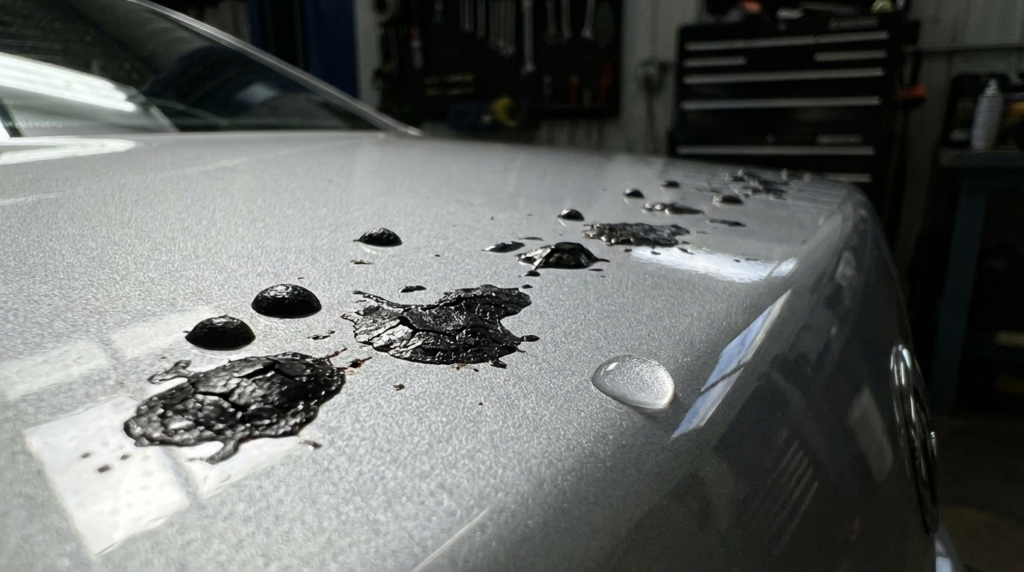
Road tar — also called bitumen or asphalt tar — is a refined petroleum byproduct. Road crews spray it as a binding agent during resurfacing. At high temperatures, it becomes airborne as fine mist or small droplets. Those droplets land on your lower panels, rocker areas, and bumpers while still semi-liquid. As they cool, the tar contracts and mechanically keys into the microscopic pores of your clear coat.
Once hardened, tar sits on the surface as a raised, slightly tacky black deposit. It resists water. It resists alkaline soap. Normal washing physically cannot break the intermolecular adhesion holding it in place.
The only way to dissolve it is like-dissolves-like chemistry. Tar is non-polar. You need a non-polar solvent to penetrate the tar binder and break it free from the clear coat surface.
Choosing the Right Solvent: Petroleum Distillates vs. d-Limonene
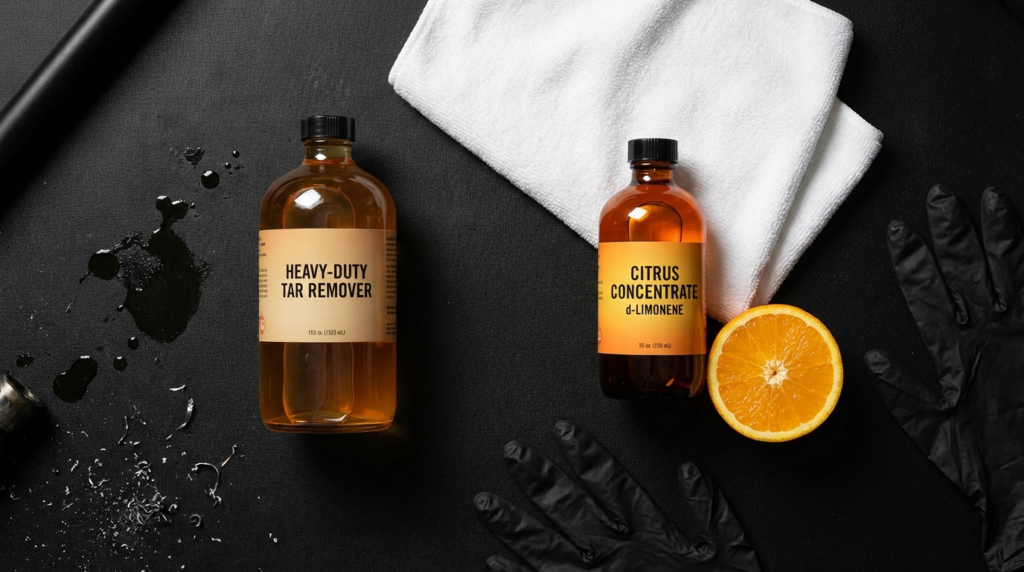
Two product categories actually work. Understanding the difference helps you pick the right one for your situation.
| Property | Refined Petroleum Distillates | Concentrated d-Limonene (Citrus Terpene) |
|---|---|---|
| Source | Refined crude oil fractions | Cold-pressed citrus rinds |
| Polarity | Non-polar | Non-polar |
| Dissolving Speed | 60–90 seconds | 60–90 seconds |
| Paint Safety Window | Narrow — do not exceed 2–3 minutes | Slightly wider, but still time-sensitive |
| Residue After Wipe | Light oily film — needs follow-up wash | Mild citrus film — needs follow-up wash |
| Odor | Petroleum/mineral odor | Orange/citrus |
| Best For | Heavy, old, or layered tar deposits | Lighter fresh deposits, paint-sensitive users |
| Risk on Soft Paint | Moderate if overexposed | Low-moderate if overexposed |
Both options work. Petroleum distillates tend to work faster on thick, hardened deposits. d-Limonene is a reasonable alternative if you prefer a plant-derived solvent and are dealing with fresher, thinner tar.
What does not work: WD-40, diluted all-purpose cleaners, and standard tar-and-bug sprays with low active concentrations. Some of these products list petroleum distillates on the label but at concentrations too low to dissolve hardened tar in one application.
What You Need Before You Start
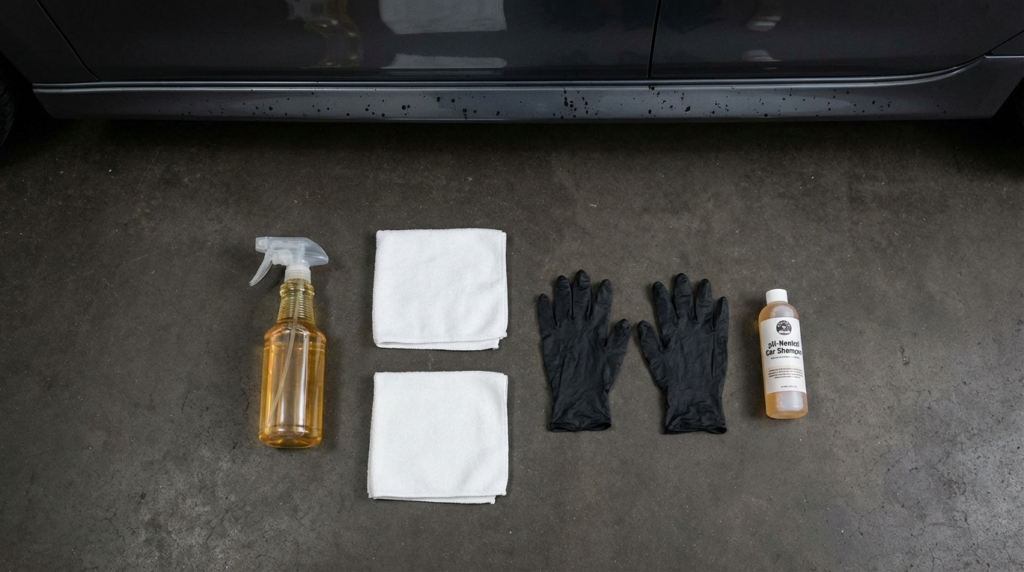
Gather everything before touching the car. Once solvent is on the panel, you are working against a clock.
- Dedicated tar remover (petroleum distillate-based or high-concentration d-Limonene)
- Two clean microfiber towels — one for application, one for removal
- Spray bottle or applicator cap — direct application, no aerosol overspray
- pH-neutral car shampoo — for the follow-up wash
- Gloves — nitrile, not latex
Work in shade. In direct sun, the panel surface temperature rises and the solvent evaporates faster than it can penetrate. Assuming standard garage temperatures around 65–75°F, you have a reliable working window.
The Safe Removal Process, Step by Step
Step 1: Wash the Car First
Run a standard contact wash before applying any solvent. Remove loose dirt, grit, and road film. Tar removal on a dirty panel risks dragging abrasive particles across your clear coat during the wipe-off stage. This is the step most people skip. Do not skip it.
Step 2: Identify All Tar Deposits
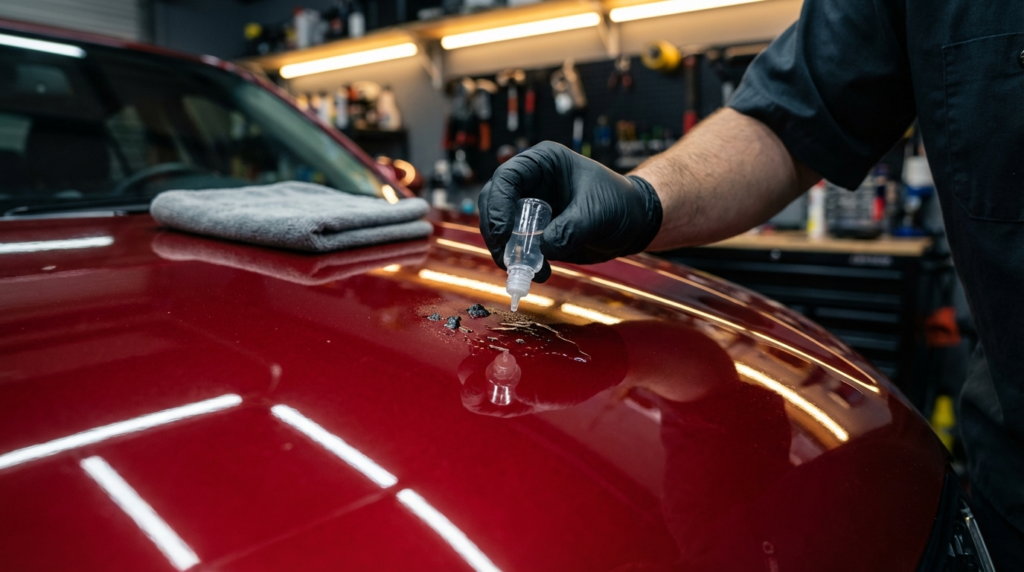
Walk the full perimeter of the car in good lighting. Tar deposits concentrate on lower panels, rocker sills, the rear bumper, and the lower half of the front bumper. You will often find smaller, lighter deposits higher up — those are the ones people miss and then find six months later when they are fully cured.
Mark your areas mentally or section off one panel at a time.
Step 3: Apply Solvent Directly to the Deposit
Apply the petroleum distillate or d-Limonene directly onto the tar spot. Do not spray it across the entire panel. Target application keeps dwell time controlled and minimizes unnecessary solvent contact with clean clear coat.
Use enough product to fully saturate the deposit — roughly the size of a coin’s worth of liquid per cluster of spots. Let it sit. Do not touch it yet.
60 seconds. That is your baseline dwell time.
When you are actually standing over the hood of a car watching this, you will see the edges of the tar deposit start to look slightly glossy and wet as the solvent migrates under the edges of the hardened tar. That is the binder releasing. That is exactly what you want to see before you wipe.
Step 4: Wipe Without Pressure
Fold a clean microfiber towel to a flat, soft pad. Place it over the deposit and wipe in one smooth, low-pressure pass. The tar should transfer onto the towel cleanly. You are not scrubbing. You are collecting dissolved material.
If it does not wipe clean on the first pass, apply solvent again for another 30–45 seconds and retry. Do not grind the towel into the paint trying to force the issue.
The biggest mistake I see beginners make in the shop is wiping too early — before the solvent has fully penetrated the tar binder. They feel resistance, push harder, and drag the tar edge across the clear coat. That causes micro-scratching. Wait the full dwell time. The chemistry does the work.
Flip your towel to a clean section between wipes. A contaminated microfiber drags dissolved tar back across the surface.
Step 5: Follow Up with a Panel Wash
After all tar is removed, wash the treated panels with pH-neutral shampoo and rinse thoroughly. This removes solvent residue and the oily film that petroleum distillates leave behind. Skipping this step leaves a slight haze on the surface and degrades any wax or sealant you apply afterward.
Dry with a clean microfiber drying towel.
Step 6: Inspect Under Raking Light
Hold a detailing light or a flashlight at a low angle to the panel surface. Check for any remaining tar spots, solvent haze, or surface marring. Catching these under raking light is the difference between a finished job and one that looks questionable in direct sunlight.
If the surface shows any light scratching from tar drag, a single-step paint cleaner or a very light polish on that specific area will restore clarity.
Protecting the Paint After Removal
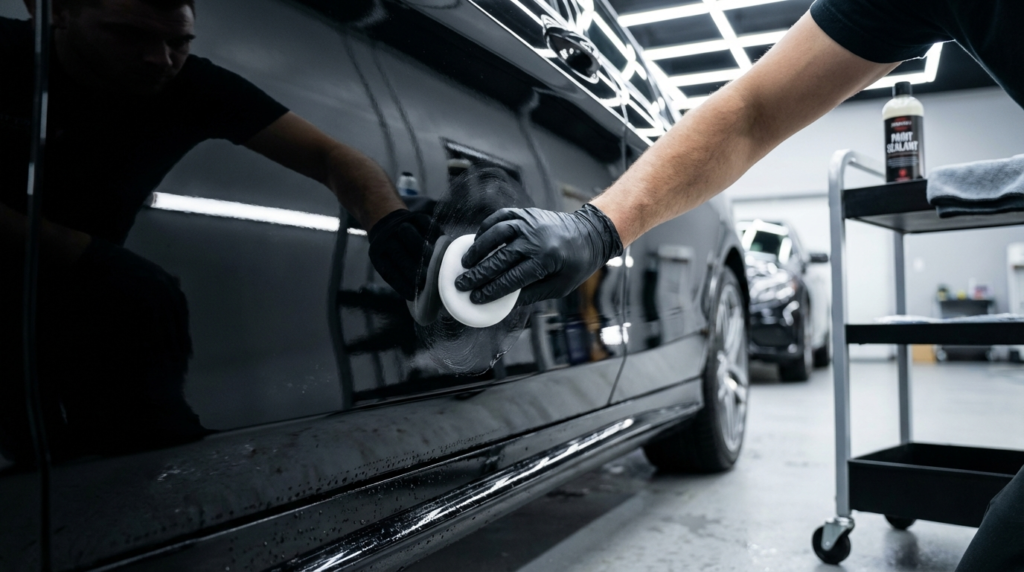
Tar removal strips wax and most paint sealants from the treated area. Do not skip this step and then wonder why water stops beading on those panels.
Apply a fresh layer of carnauba wax, paint sealant, or a spray ceramic topper to the cleaned areas. This restores hydrophobic protection and makes future tar deposits easier to remove — they sit on top of the protection layer rather than bonding directly to the clear coat.
How to Prevent Heavy Tar Buildup
Prevention is not complicated. A few habits reduce how often you need to do this:
- Apply a dedicated paint protection product (wax, sealant, or ceramic coating) to lower panels regularly. Tar releases from a protected surface far more easily than from bare clear coat.
- Wash lower panels weekly if you drive frequently on freshly surfaced roads. Fresh tar is much easier to remove than tar that has cured for weeks.
- Use a tar-specific pre-wash spray monthly as a maintenance step on high-impact zones before your normal wash.
FAQs
Will petroleum distillate tar remover strip my ceramic coating?
Most single-application ceramic coatings can tolerate brief solvent contact without complete degradation, but repeated use of petroleum distillates on the same area will wear down the coating over time. Use the shortest effective dwell time. Follow up with a spray ceramic topper on the treated area after washing.
Can I use straight mineral spirits or paint thinner instead of a purpose-made tar remover?
Technically, mineral spirits and low-odor paint thinner are petroleum distillates and will dissolve tar. The problem is concentration control and paint safety. Purpose-made tar removers are formulated to a concentration that is effective but less aggressive on clear coat. Undiluted hardware-store solvents carry a higher risk of softening or hazing older or softer paint systems if left on too long.
How do I know if the tar has fully dissolved before wiping?
Look at the edges of the deposit under direct light after 60 seconds of dwell time. If the tar edge looks wet and slightly spread, the binder is dissolving. If the edges still look dry and hard, give it another 30 seconds. A fully dissolved deposit should offer zero resistance when you lay a microfiber flat against it.
My tar deposits are extremely old and thick — should I extend the dwell time?
For very heavy, multi-layered deposits, a second or even third application works better than a single long dwell time. Apply, wait 60–90 seconds, wipe what releases, then reapply to what remains. This approach is safer for the clear coat than parking solvent on the panel for three to five minutes continuously.
What to Do Right Now
Pick up a petroleum distillate tar remover or a high-concentration d-Limonene product before your next wash day. Run a standard wash first, then work through the removal process one panel at a time. The whole job on a moderately affected car takes under 30 minutes. The chemistry is doing most of the work — you just have to trust the dwell time and resist the urge to scrub.