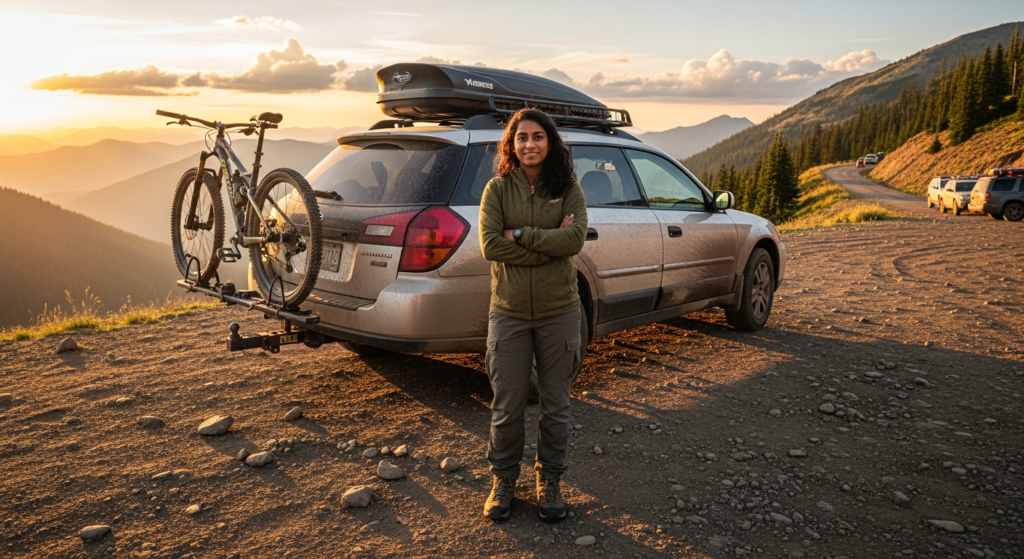

I’ll be straight with you – I wasted $8,000 on the wrong vehicle before I figured this out.
Back in 2019, I bought a used SUV that everyone said was “perfect for adventures.” Three months later, I was stranded on a forest service road with a blown transmission, my mountain bikes still strapped to the roof, watching my weekend slip away. That expensive mistake taught me more about adventure vehicles than any forum ever could.
I’m Priya Verma, and I’ve spent the last five years testing vehicles for weekend trips – not as a hobby, but as someone who lives for those Friday afternoon escapes. I’ve hauled kayaks, mountain bikes, camping gear, and climbing equipment across everything from desert washboard roads to muddy mountain passes. I’ve made the mistakes so you don’t have to.
The truth nobody tells you? You don’t need a $60,000 truck to have great adventures. But you do need to know exactly what matters and what’s just marketing noise.
Let me show you what actually works.
Why Most “Adventure Vehicle” Advice is Garbage
Here’s what drives me crazy about typical adventure vehicle recommendations: they’re written by people who test drive vehicles for two hours on paved roads, then declare them “trail-ready.”
I’ve seen countless articles recommending vehicles that sound great on paper but fall apart in real use. The 2015-2017 Jeep Renegades with their transmission issues? Recommended everywhere. The Nissan Pathfinders that can’t handle actual paths? Called “rugged” by reviewers who never left the parking lot.
Generic advice tells you to “get something with four-wheel drive and good clearance.” That’s like saying “buy food that tastes good” – technically true but completely useless.
What actually matters for weekend adventures isn’t what automotive journalists think. It’s what holds up when you’re loading wet gear at 11 PM after a long day, what doesn’t leave you stranded two hours from cell service, and what won’t drain your bank account before you even hit the trail.
What Makes a Vehicle Actually Adventure-Ready (Not Marketing Ready)
After five years and probably 50,000 miles of weekend trips, here’s what separates vehicles that work from vehicles that just look the part.
Ground clearance matters, but not the way you think. You don’t need 12 inches of clearance for most adventures. I’ve taken my old Subaru Forester (8.7 inches) places that stopped modified trucks. Why? Because clearance means nothing if your approach angle is terrible or your wheelbase is so long you high-center on every forest road rut.
Cargo space is more important than anyone admits. I can’t count how many times I’ve seen people at trailheads playing Tetris with their gear because their “adventure vehicle” couldn’t fit two bikes and a cooler. If you can’t close your hatch without strapping stuff to the roof, your vehicle isn’t working for you.
Reliability trumps capability every single time. A vehicle that goes anywhere but might not start is worse than a vehicle with limitations that always gets you home. I learned this the hard way.
The Real Budget Adventure Vehicle Breakdown
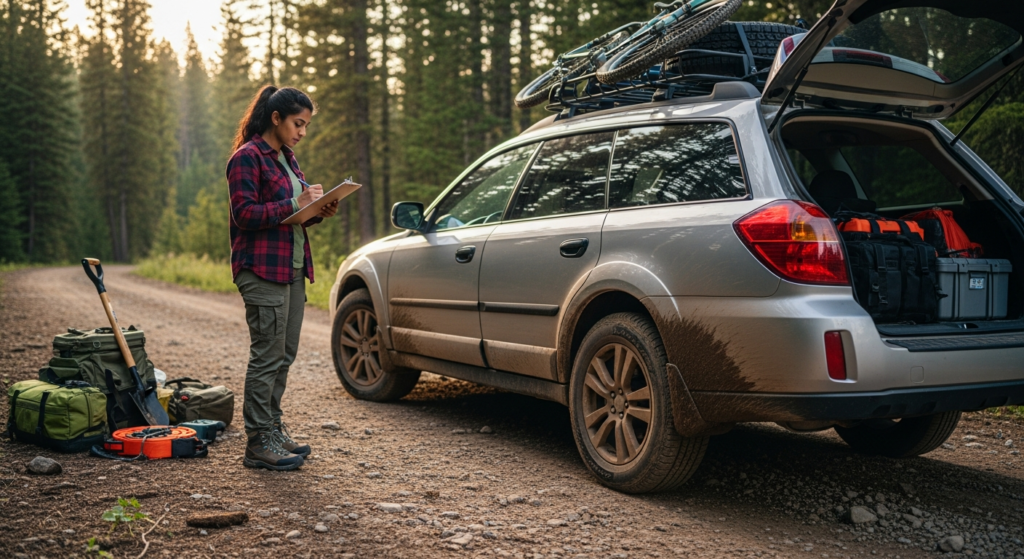
Let me cut through the noise and show you what actually works in different price ranges. These aren’t vehicles I saw at an auto show – these are vehicles I’ve either owned or spent serious time with on real trips.
Under $10,000: The Sweet Spot Everyone Ignores
2008-2012 Subaru Outback
I drove one of these for three years and put 60,000 hard miles on it. Here’s the truth: it’s not sexy, your friends won’t be impressed, but it’ll take you almost anywhere you want to go.
The boxer engine sits low, giving you stability on rough roads. The symmetrical all-wheel drive isn’t as aggressive as four-wheel drive, but for weekend warriors, it’s more than enough. I’ve driven through snow, mud, and rocky forest roads without issue.
What breaks: head gaskets around 100,000 miles (plan $1,500-$2,000 for this repair). Some years had transmission issues, so get a pre-purchase inspection.
What works: everything else. The cargo space swallows bikes, gear, and camping equipment. The roof rails handle kayaks and cargo boxes without complaint.
2005-2010 Toyota 4Runner
If you can find one in decent shape under $10,000, grab it. These things are bulletproof. I know people still driving 4Runners with 300,000 miles who’ve done nothing but oil changes and brake pads.
The V6 gets terrible gas mileage (expect 16-18 MPG), but that’s the price of reliability. The rear hatch opens sideways, which is annoying in tight parking spots but genius when you’re camped and want a covered area to cook under during rain.
What breaks: not much. Seriously. Lower ball joints eventually wear out. Some years had rust issues in snowy climates.
What works: it’ll outlive you. It’ll carry everything. It’ll go places that stop newer, fancier vehicles.
2007-2011 Honda CR-V
This one surprises people. It’s not a traditional “adventure vehicle,” but I’ve taken one through conditions that would make most drivers nervous.
The real-time all-wheel drive isn’t full-time, which means better gas mileage (22-24 MPG) for highway driving to trailheads. The low floor height makes loading heavy gear easier than high SUVs – your back will thank you after a long day.
What breaks: the air conditioning compressor can fail. Some early models had transmission fluid leaking issues.
What works: cargo space is massive with the seats folded. It’s comfortable for long drives. Parts are cheap and every mechanic knows how to work on them.
$10,000-$20,000: The Reliable Middle Ground
2013-2016 Subaru Forester
I replaced my Outback with a 2015 Forester, and it’s been my primary adventure vehicle for three years. The 2.5-liter engine has enough power for mountain passes without being thirsty. I average 26 MPG on highway drives to trailheads, which adds up when you’re taking trips every weekend.
The X-Mode (added in 2014) is a legitimate off-road feature that actually works. I’ve used it in mud, snow, and steep descents, and it does what it promises – controls wheel slip and manages hill descent without drama.
What breaks: the CVT transmission makes some people nervous, but mine has been fine at 85,000 miles. Keep up with the fluid changes.
What works: the rear cargo area is perfectly sized for bikes with front wheels removed. The roof rack weight limit is 700 pounds, which handles most adventure setups. Visibility is excellent, which matters when you’re backing up to a tight camping spot.
2010-2014 Toyota Tacoma (Base or SR5)
I borrowed a friend’s 2012 Tacoma for a month-long road trip, and I finally understood the hype. But here’s the reality check: base models in this price range are work trucks with minimal features. No fancy screens, basic seats, road noise.
But if you need a true truck bed for gear, there’s no substitute. I hauled a motorcycle in the back, plus camping gear, tools, and spare parts. Can’t do that in an SUV.
What breaks: the frame rust issue from earlier years was mostly fixed by 2010, but check underneath anyway. Leaf spring failures can happen on heavily used trucks.
What works: these hold value better than almost any vehicle. If you buy smart, you’ll lose almost nothing when you sell. The four-cylinder gets decent mileage (19-21 MPG), and the V6 has plenty of power for hills.
2012-2015 Jeep Wrangler (JK)
Here’s my controversial take: Wranglers are overrated for most weekend warriors. I said it.
I spent six months with a 2014 two-door Wrangler, and while it was capable off-road, it was miserable on the three-hour highway drive to get there. Wind noise, rough ride, terrible gas mileage (15-17 MPG). The rear cargo area is tiny with the seats up.
But if you’re doing serious rock crawling or need removable doors and roof, nothing else compares. Just know what you’re getting into.
What breaks: the 3.6-liter engine is solid, but the soft top develops leaks. Hard tops crack at the hinges. Death wobble is real – usually caused by worn steering components.
What works: it goes places nothing else in this price range can reach. The aftermarket support is massive if you want to modify it. They hold value.
$20,000-$30,000: The Modern Sweet Spot
2018-2020 Subaru Crosstrek
This is basically a lifted Impreza, and I mean that as a compliment. It’s small enough to park anywhere, gets good mileage (27-29 MPG), but has enough clearance (8.7 inches) and capability for most adventure situations.
I drove one for a week-long trip through Colorado, and it handled everything from Denver traffic to mountain forest roads without breaking a sweat. The smaller size makes it easier to navigate tight switchbacks and tricky trailhead parking.
What breaks: too new to have major patterns, but the CVT transmission is the weak point across all modern Subarus.
What works: comes standard with all-wheel drive, even base models. EyeSight safety features are genuinely useful on long drives. Cargo space is adequate for two people’s gear.
2017-2019 Honda Ridgeline
Everyone gives me grief about including this. “It’s not a real truck,” they say. Who cares? It’s more practical than most “real trucks.”
The in-bed trunk is genius for storing recovery gear, tools, and dirty items separate from clean gear. The dual-action tailgate makes loading easier. The ride quality is closer to a car than a truck, which your passengers will appreciate on long drives.
What breaks: not much data yet, but Honda reliability is generally solid. Some owners report transmission issues.
What works: it tows 5,000 pounds, which handles most adventure trailers. The bed is composite, so it won’t rust or dent. All-wheel drive is standard. Gas mileage (19-22 MPG) is better than traditional trucks.
2016-2018 Toyota Tacoma TRD Off-Road
If you want a midsize truck that can handle serious terrain without modifications, this is it. The TRD Off-Road package includes a locking rear differential, Bilstein shocks, and crawl control – features that actually work in real conditions.
I’ve driven these on everything from beach sand to mountain rocks, and the capability is legitimate. The crawl control is particularly useful if you’re not experienced with technical off-roading.
What breaks: some owners report transmission shifting issues. The bed isn’t long enough for full-size dirt bikes without angling them.
What works: reliability is excellent. It holds value better than anything else on this list. The rear seat actually fits adults, unlike older Tacomas.
The Features That Actually Matter (And The Ones That Don’t)
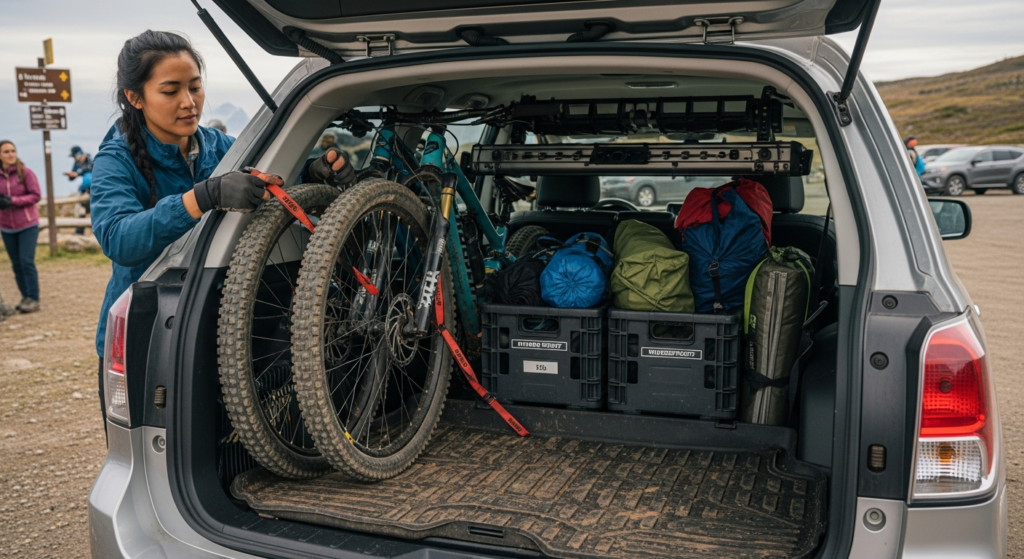
After hauling gear through dozens of states, here’s what I’ve learned about features.
Critical Features You Can’t Skip
All-wheel drive or four-wheel drive: Not negotiable if you’re doing anything beyond paved roads. But all-wheel drive is enough for 90% of weekend adventures. You don’t need low-range gearing unless you’re rock crawling.
Roof rails or crossbars: You’ll run out of interior space fast. Roof storage for bikes, kayaks, or cargo boxes is essential. Make sure the weight rating is adequate – cheap roof racks fail.
Adequate cargo space: Measure what you actually carry. Two mountain bikes with front wheels removed need about 6 feet of floor length. Camping gear for two people needs about 20 cubic feet. Don’t guess.
Reliability rating: Check Consumer Reports, J.D. Power, and owner forums. A vehicle that breaks down isn’t an adventure – it’s a nightmare.
Nice-to-Have Features
Skid plates: Protect your oil pan and transmission from rocks. Many vehicles offer these as factory options or easy aftermarket additions.
Hill descent control: Makes steep, loose descents less scary. Not essential, but genuinely useful if you venture into mountain terrain.
Trailer hitch: Even if you don’t have a trailer now, you might later. Factory hitches are cleaner installations than aftermarket.
Washable interior: Rubber floor mats and water-resistant seats make life easier when you’re dealing with mud, snow, and wet dogs.
Features That Don’t Matter (Marketing Hype)
Touchscreen size: You’ll use your phone for navigation anyway. A big screen doesn’t make a vehicle more capable.
Leather seats: They’re cold in winter, hot in summer, and show wear faster than cloth. Cloth seats are actually better for adventure vehicles.
Chrome trim and fancy wheels: Adds cost, gets scratched on trails, doesn’t improve function.
Multiple drive modes: Most vehicles with five different terrain modes work just as well leaving it in “auto.” It’s a solution looking for a problem.
The Hidden Costs Nobody Mentions
Here’s where most budget advice fails: they ignore the ongoing costs that determine whether your adventure vehicle is actually affordable.
Gas Mileage Math
I track every fill-up. Over a year of weekend trips (about 15,000 miles), here’s what different vehicles actually cost in gas:
| Vehicle Type | Average MPG | Annual Gas Cost* |
|---|---|---|
| Subaru Forester | 25 MPG | $2,400 |
| Honda CR-V | 26 MPG | $2,300 |
| Toyota 4Runner | 17 MPG | $3,530 |
| Jeep Wrangler | 16 MPG | $3,750 |
| Toyota Tacoma V6 | 19 MPG | $3,160 |
*Based on $4/gallon and 15,000 miles/year
That’s a $1,350 annual difference between a fuel-efficient crossover and a thirsty off-roader. Over five years, that’s $6,750 – enough to buy better gear, take more trips, or save for a newer vehicle.
Insurance Surprises
Some adventure vehicles cost more to insure than you’d expect. Jeep Wranglers and 4Runners have high theft rates, which increases premiums. Trucks often cost more than SUVs due to repair costs.
Get insurance quotes before you buy. I’ve seen people surprised by $200+ monthly insurance bills on vehicles they thought would be cheap.
Maintenance Reality
Oil changes are cheap. Everything else adds up fast.
Tires: All-terrain tires cost $150-$250 each. You’ll replace them every 40,000-60,000 miles depending on how aggressive you drive. That’s $800-$1,000 every few years.
Brakes: Mountain driving wears brakes faster. Budget $400-$600 for brake jobs every 30,000-40,000 miles.
Alignment: Hit enough forest road ruts, and you’ll need alignment annually. That’s $100-$150 each time.
Undercarriage cleaning: If you drive in winter salt or beach sand, undercarriage rust protection matters. Either pay $100-$150 for annual rustproofing or accept that your vehicle will rust faster.
How to Buy Smart (My Hard-Won Process)
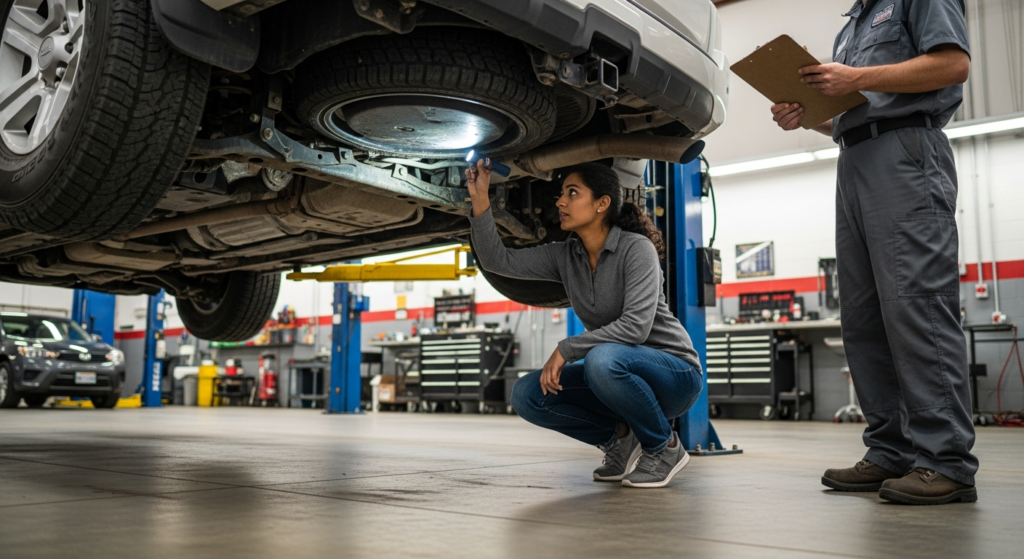
I’ve bought four adventure vehicles and helped friends buy probably a dozen more. Here’s what works.
The Pre-Purchase Inspection is Non-Negotiable
I don’t care how good the vehicle looks or how nice the seller seems. Pay $150-$200 for a mechanic to inspect it. This has saved me from buying problem vehicles three times.
What mechanics look for:
- Frame rust (kills vehicle value and safety)
- Oil leaks (expensive repairs coming)
- Transmission condition (most expensive fix)
- Suspension wear (affects capability and safety)
- Tire wear patterns (indicates alignment or suspension issues)
Check the Service History
Vehicles with complete service records are worth $1,000-$2,000 more than vehicles without them. Why? You know what’s been done and what’s coming due.
Red flags in service history:
- Major repairs right before listing (often means more problems coming)
- Zero maintenance records (assume nothing was done)
- Multiple transmission services before 100,000 miles (transmission problems)
- Repeated electrical work (nightmare vehicles)
Test Drive on Rough Roads
I once test drove a truck that seemed perfect – until I took it on a gravel road and discovered the suspension was completely shot. The smooth pavement had hidden the problem.
Always test drive on:
- Rough pavement or gravel roads (reveals suspension issues)
- Highway speeds (shows drivetrain problems)
- Steep hills (tests engine and transmission)
- Tight parking lot turns (reveals steering problems)
Research Common Problems
Every vehicle has weak points. Spend an hour on owner forums reading about common failures. This knowledge is power during negotiations.
When I was shopping for my Forester, I knew about the CVT concerns and asked specifically about transmission fluid changes. The seller’s answer told me everything about how well the vehicle was maintained.
Modifications That Actually Pay Off
I’m skeptical of most modifications. The off-road industry wants to sell you thousands of dollars of gear you don’t need.
But here are the modifications that genuinely improve function for weekend adventures.
Immediate Value Additions
Quality all-terrain tires: This is the single best modification for any adventure vehicle. I replaced the highway tires on my Forester with Falken Wildpeak A/T Trails, and the difference in gravel, mud, and snow performance was dramatic. Cost: $600-$900 for four tires.
Roof rack or hitch rack for bikes: Carrying bikes inside takes up all your cargo space. External racks free up room for camping gear. Cost: $200-$400 for quality racks.
Skid plate protection: If your vehicle didn’t come with skid plates, adding them protects expensive components. Cost: $150-$400 depending on coverage.
Recovery gear: A tow strap, D-shackles, and a shovel live in my vehicle permanently. They’ve gotten me and others unstuck multiple times. Cost: $100-$150 for basics.
Modifications to Skip
Lift kits: Unless you’re rock crawling, the added expense ($1,500-$3,000) doesn’t improve your actual adventures. It makes highway driving worse and increases maintenance costs.
Aggressive off-road tires: They’re loud, wear fast, and handle terribly on wet pavement. All-terrain tires do 95% of what most people need.
Winches: I’ve owned adventure vehicles for five years and never needed a winch. If you’re going places where you might need a winch, you should be traveling with others who can pull you out.
LED light bars: They look cool but blind other drivers and aren’t legal in most places. Your headlights are fine.
Real Trip Planning With Budget Vehicles
The vehicle is just the start. Here’s how I plan trips around vehicle capabilities and budget constraints.
Know Your Limits
I keep a list on my phone of what my vehicle can’t do. For my Forester, that includes:
- Deep water crossings (8.7 inches clearance means 6 inches water max)
- Steep, loose rock climbs (lacks low-range gearing)
- Deep sand (all-wheel drive struggles without momentum)
Knowing these limits hasn’t stopped me from having amazing adventures. It just means I pick appropriate routes.
Pack Smart for Your Space
I learned this through trial and error. Here’s my current packing list that fits in my Forester with two people:
Essential gear only:
- Tent, sleeping bags, pads (compressible)
- Cooking gear (compact camp stove, not full kitchen)
- Clothes for three days maximum (laundry exists)
- Food in soft coolers (rigid coolers waste space)
- Water in collapsible containers (empty and compress)
What I stopped carrying:
- Extra chairs (sit on the tailgate)
- Full-size coolers (soft coolers pack better)
- “Just in case” clothing (if you need it, buy it there)
- Multiple camp stoves (one works fine)
Budget for Fuel and Camping
A realistic weekend adventure budget in a fuel-efficient vehicle:
| Expense | Cost |
|---|---|
| Gas (500 miles roundtrip) | $80 |
| Camping fees | $30-$60 |
| Food | $60-$100 |
| Park entrance fees | $0-$35 |
| Total | $170-$275 |
Compare that to flying somewhere and renting a car, and weekend adventures become incredibly affordable.
Common Problems and Real Solutions
Let me save you from the mistakes I’ve made.
“My vehicle struggles in mud/snow/sand”
Problem: All-wheel drive isn’t magic. It helps you get going, but it doesn’t help you stop or turn.
Solution: Tire pressure matters more than most people realize. I drop to 25-28 PSI for sand and snow, 30-32 PSI for mud. This increases the tire’s footprint and improves traction dramatically.
Also: Momentum is your friend in snow and sand. Gentle, steady throttle beats aggressive driving every time.
“I can’t fit all my gear”
Problem: You’re carrying too much stuff, or you’re packing inefficiently.
Solution: Make a list of what you actually used on your last three trips. Stop packing “just in case” items. Use compression bags for sleeping bags and clothes. Pack heavy items low and against the seatbacks for better weight distribution.
“My vehicle makes weird noises on rough roads”
Problem: Could be loose cargo, worn suspension, or exhaust heat shields rattling.
Solution: Check obvious stuff first. Are your cargo straps tight? Is anything loose in the back? If the noise persists, get it checked. Ignoring suspension noises leads to expensive failures.
“I’m worried about getting stuck”
Problem: Fear is smart, actually. Getting stuck is expensive and potentially dangerous.
Solution: Always travel with:
- A charged phone and backup battery
- Downloaded offline maps
- Basic tools (shovel, tow strap)
- Extra water and food
- Someone who knows your route and timeline
If a route looks sketchy, turn around. No Instagram photo is worth a tow bill or worse.
Frequently Asked Questions
Do I really need four-wheel drive for weekend adventures?
No, but you need all-wheel drive at minimum. I’ve taken front-wheel drive vehicles on adventures, and they work on maintained gravel roads. But the first time you hit mud, snow, or steep loose surfaces, you’ll wish you had all-wheel drive. Four-wheel drive with low-range is only necessary for rock crawling and serious off-roading that most weekend warriors never attempt.
How much should I budget for repairs in the first year?
Budget $1,000-$1,500 for unexpected repairs on any used vehicle, even reliable ones. This covers surprises like worn brake pads, a failing alternator, or suspension components that need replacement. If you buy smart and get a pre-purchase inspection, you might not spend this, but having the budget prevents panic when something breaks.
Can I use a two-wheel drive truck for adventure activities?
I’ve done it, and it’s frustrating. Two-wheel drive trucks are fine for hauling gear to established campgrounds on paved roads. But the moment you want to explore forest roads or handle wet conditions, you’ll struggle. The rear-wheel drive setup means less weight over the drive wheels, which equals terrible traction in anything slippery. Save yourself the headache and get four-wheel drive or all-wheel drive.
Should I buy new or used for an adventure vehicle?
Used, almost always. New vehicles lose 20-30% of their value in the first three years. That’s thousands of dollars you could spend on better gear, more trips, or building an emergency fund. The sweet spot is 3-7 years old with 40,000-80,000 miles. You avoid the worst depreciation but still get a relatively modern vehicle. The only exception: if you need specific new features or can’t find used inventory in your market.
Making Your Decision
After five years and countless miles, here’s what I’ve learned: the perfect adventure vehicle doesn’t exist.
Every vehicle is a compromise between capability, comfort, cost, and practicality. The key is choosing the compromises you can live with.
If you’re doing mellow adventures – established campgrounds, maintained forest roads, occasional snow – a reliable crossover like a Subaru or Honda will serve you better than an expensive truck. You’ll save money on gas and maintenance, and that money funds more adventures.
If you need serious off-road capability or a truck bed for large gear, accept that you’ll pay more for gas and maintenance. Make that choice consciously, not because the vehicle looks cool.
If you’re buying used, patience saves thousands. The right vehicle at the right price will appear eventually. Don’t settle for a problematic vehicle because you’re excited to start adventuring.
The best adventure vehicle is the one that’s reliable enough to always get you home, capable enough to reach the places you want to go, and affordable enough that you can actually take trips instead of making payments.
I’m still driving my 2015 Subaru Forester. It’s not the most capable vehicle I could buy. It’s not the coolest. But it’s been to 15 states, handled everything I’ve thrown at it, and never left me stranded. It lets me focus on the adventures instead of worrying about the vehicle.
That’s worth more than any badge or off-road rating.
Start with what you can afford, buy smart, and get out there. The trails don’t care what you drive – they only care that you showed up.