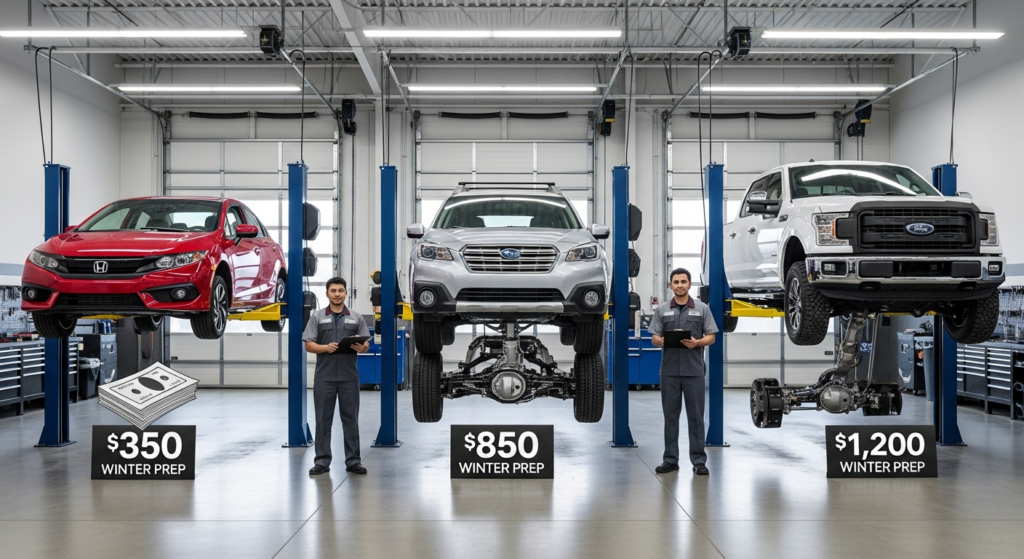

I’ve been driving through brutal winters for five years now, and let me tell you something nobody wants to admit: your vehicle type determines how much cash you’re hemorrhaging every winter. Not a little difference—we’re talking hundreds, sometimes thousands of dollars depending on what’s sitting in your garage.
Last December, I watched my neighbor drop $800 on winter prep for his AWD crossover while I spent $320 on my front-wheel-drive sedan. Same climate, same roads, wildly different bills. That’s when I started tracking actual costs across different vehicle types, and the numbers tell a story most mechanics won’t share upfront.
I’m Priya Verma, and I’ve spent the last five years working as an automotive consultant specializing in seasonal vehicle maintenance across different climates. I’ve analyzed hundreds of winter prep bills, talked to mechanics in seven states, and personally maintained everything from compact cars to full-size trucks through some of the worst winter conditions. What I’ve learned doesn’t match the generic advice you’ll find plastered across most automotive blogs.
Here’s what actually matters: your drivetrain configuration, your vehicle’s weight, and your tire setup will determine your winter expenses more than any other factors. Let’s break down the real costs without the marketing fluff.
Front-Wheel Drive Vehicles: The Budget-Friendly Winter Option
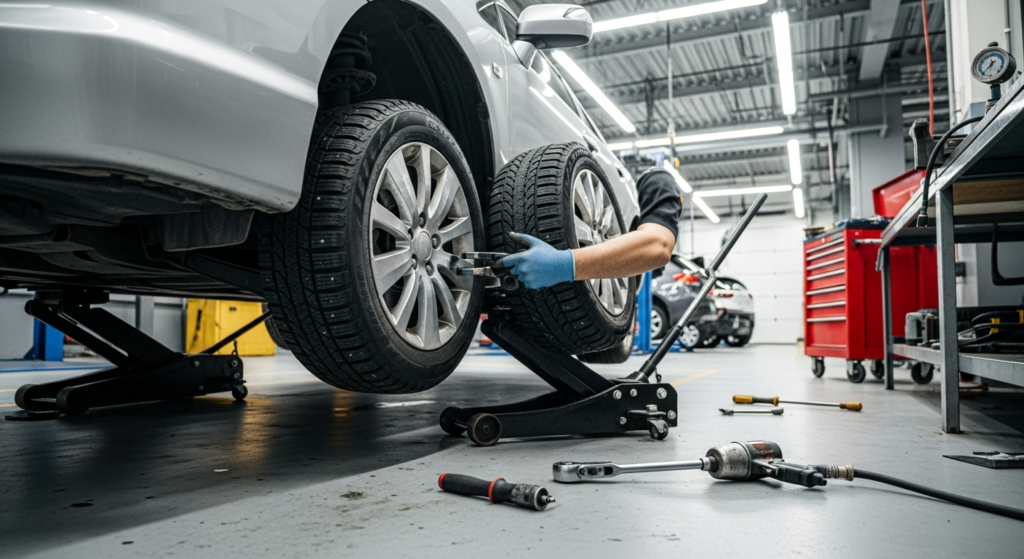
Front-wheel drive cars typically require the least winter preparation investment. I’m talking $250-$450 for most compact and midsize sedans, assuming you’re not starting from scratch.
Here’s what you’re actually paying for:
Winter Tire Costs (FWD)
- Set of four winter tires: $400-$700
- Installation and balancing: $80-$120
- TPMS service (if needed): $40-$80
But here’s the thing nobody mentions—you’re rotating these with your summer set, so the per-season cost drops significantly. I amortize winter tire costs over three seasons minimum, which brings your annual tire expense down to roughly $160-$280.
Fluid and Battery Service
- Coolant flush and fill: $100-$150
- Battery testing and replacement (if needed): $120-$200
- Washer fluid (winter formula): $8-$15
Your FWD vehicle has one major advantage: simpler drivetrain means fewer fluid changes. You’re not dealing with transfer case fluid, rear differential service, or the complex AWD systems that drain wallets.
Additional FWD Winter Prep
- Wiper blade replacement: $20-$40
- Emergency kit supplies: $50-$100
- Undercoating or rust protection: $100-$150
I skip the undercoating on newer vehicles. It’s a dealer upsell that provides minimal benefit if you’re already washing road salt off regularly. Save that $150.
My FWD Honda Civic costs me about $320 annually for winter prep once I factor in tire amortization. That’s my baseline comparison for everything else.
Rear-Wheel Drive Vehicles: The Traction Tax
RWD vehicles hit your wallet harder, not just because of preparation costs but because of the consequences of inadequate prep. I’ve seen too many RWD trucks and sports cars stuck or damaged because owners cheaped out on winter tires.
RWD Winter Requirements
- Winter tires (aggressive tread required): $500-$900
- Additional weight for bed/trunk: $50-$100
- Potential limited-slip differential service: $150-$250
The differential service isn’t always necessary, but if you’ve got a performance RWD vehicle with limited-slip, you’re looking at more frequent fluid changes in winter conditions. That’s an extra $150-$200 every other year that FWD owners never think about.
The Hidden RWD Costs
Here’s what drives me crazy about generic winter advice for RWD vehicles: everyone tells you to “add weight” but nobody explains the real cost and logistics.
You need approximately 200-300 pounds over the rear axle for decent traction. That’s not free:
- Sandbags or tube sand: $30-$50
- Proper weight distribution system: $50-$100
- Potential bed liner (trucks): $200-$500
And you’re hauling this weight around all winter, which means reduced fuel economy. I calculated roughly 5-8% worse mileage on my friend’s RWD pickup after adding weight, which adds another $100-$150 to winter costs over a four-month season.
Total RWD Winter Prep: $600-$850 for the first season, then $400-$500 annually after that.
All-Wheel Drive and Four-Wheel Drive: The Premium Preparation Package
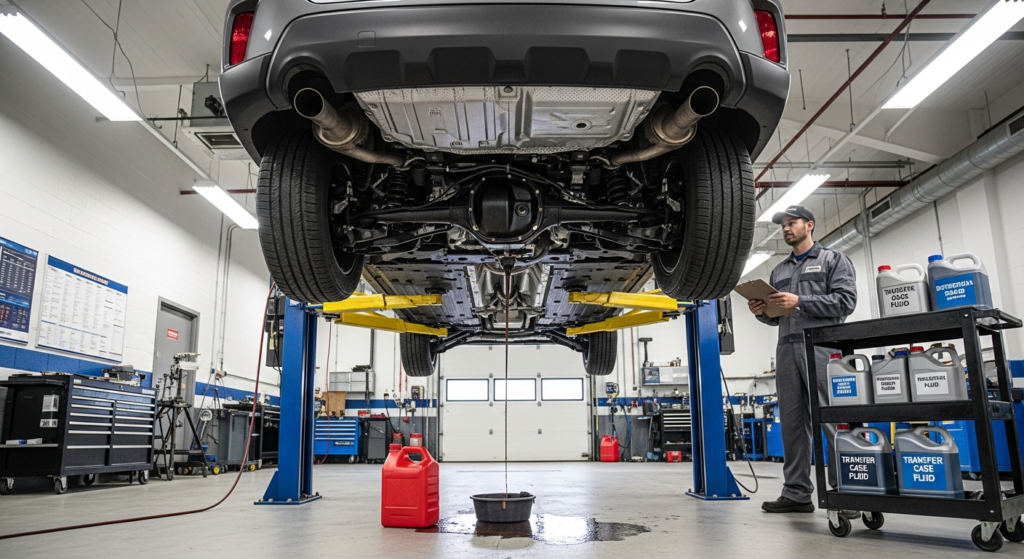
This is where winter costs get aggressive. AWD and 4WD systems require more maintenance, more expensive tires, and more frequent service intervals.
I work with a lot of AWD crossover and SUV owners who are shocked when their winter prep bill hits $800-$1,200. They bought the vehicle thinking AWD would make winter easier—and it does for driving, but not for your bank account.
AWD/4WD Winter Tire Considerations
First problem: you’re buying bigger, heavier tires.
- Crossover SUV winter tires: $600-$1,000
- Full-size SUV/truck winter tires: $800-$1,400
- Installation on larger wheels: $100-$160
But here’s the part that really matters—AWD and 4WD vehicles destroy tires faster. Your winter tires might last three seasons on a FWD sedan, but you’re looking at two seasons maximum on an AWD crossover with aggressive driving.
Critical AWD/4WD Fluid Services
This is the expense most people don’t budget for:
| Fluid Service | Cost Range | Frequency |
|---|---|---|
| Transfer case fluid | $150-$250 | Every 30,000 miles or 2 years |
| Rear differential fluid | $100-$180 | Every 30,000 miles or 2 years |
| Front differential fluid (if equipped) | $100-$180 | Every 30,000 miles or 2 years |
| AWD coupling service | $200-$350 | Varies by system |
Many AWD systems require more frequent fluid changes in severe winter conditions. Your owner’s manual might say 30,000 miles under normal conditions, but winter driving isn’t normal. I recommend 20,000-25,000 mile intervals if you’re dealing with heavy snow and ice.
The Subaru Example Everyone Ignores
Subaru owners love talking about winter capability, but I’ve seen their service bills. A comprehensive winter prep for a Subaru Outback or Forester runs $700-$900 when you factor in:
- Four winter tires with aggressive tread: $650-$800
- Differential and transmission fluid service: $250-$300
- Battery and fluid checks: $100-$150
- Undercoating (recommended in salt states): $150-$200
That’s not an annual cost, but it’s significant every 2-3 years on top of your baseline tire expenses.
Electric and Hybrid Vehicles: The Cold Weather Reality Check
Here’s a conversation nobody wants to have: EVs and hybrids have unique winter expenses that conventional vehicles don’t face.
EV Winter Preparation Costs
- Winter tires (often specific compounds): $600-$1,100
- Thermal management system check: $100-$200
- Battery conditioning service: $150-$250
- Home charging upgrades for cold weather: $200-$500
The last item catches people off guard. If you’re in a climate where temperatures regularly drop below 20°F, your standard 120V outlet might not provide enough power to condition the battery and charge simultaneously. You need a 240V system, which means electrical work.
The Range Tax
This isn’t a preparation cost, but it’s absolutely a winter expense. EVs lose 20-40% of their range in cold weather. If that range reduction forces you into more frequent fast-charging sessions, you’re paying:
- DC fast charging premium: $0.35-$0.55 per kWh vs $0.12-$0.25 at home
- Extra charging stops: 2-4 additional per week in severe cold
- Annual additional charging costs: $300-$600 in cold climates
Hybrid Winter Considerations
Hybrids sit in a middle ground:
- Winter tires: $500-$800
- Hybrid system battery check: $80-$150
- Standard fluid services: $150-$250
The advantage is that hybrids don’t suffer the same range penalty as pure EVs, but they do require more attention to battery conditioning than conventional vehicles.
Truck and Large SUV Winter Preparation: The Heavy-Duty Reality
If you’re driving a full-size truck or SUV, your winter prep costs scale up proportionally with vehicle size.
Full-Size Truck Winter Costs
I consulted with a fleet manager last winter who maintains 40 F-250 and Silverado 2500 trucks. His per-vehicle winter prep averaged $950-$1,300. Here’s the breakdown:
- LT truck winter tires (E-rated): $1,000-$1,600
- Differential services (front and rear): $300-$450
- Transfer case service: $200-$300
- Block heater installation (if not equipped): $200-$350
- Extended warranty on batteries: $150-$250
That block heater isn’t optional if you’re in subzero territory. I’ve seen too many diesel trucks refuse to start at -20°F without one. Gas trucks struggle too, but diesels are especially vulnerable.
Weight Class Matters
Here’s a comparison of winter prep costs by vehicle weight class:
| Vehicle Weight Class | Tire Cost | Service Cost | Total Winter Prep |
|---|---|---|---|
| Compact (under 3,000 lbs) | $400-$700 | $150-$250 | $550-$950 |
| Midsize (3,000-4,000 lbs) | $500-$800 | $200-$350 | $700-$1,150 |
| Full-size (4,000-5,500 lbs) | $700-$1,100 | $350-$500 | $1,050-$1,600 |
| Heavy-duty (over 5,500 lbs) | $1,000-$1,600 | $450-$700 | $1,450-$2,300 |
These numbers assume you’re doing proper winter preparation, not the bare minimum. The bare minimum gets expensive fast when you’re replacing damaged suspension components or paying for a tow.
Performance and Luxury Vehicle Winter Prep: The Premium Tax
High-performance and luxury vehicles don’t just cost more to buy—they cost substantially more to prepare for winter.
Premium Winter Tire Reality
Performance vehicles need performance winter tires:
- Porsche 911 winter tires: $1,400-$2,200
- BMW M-series winter tires: $1,200-$1,800
- Mercedes AMG winter tires: $1,300-$2,000
These aren’t inflated numbers. Performance winter tires in staggered fitments (different front and rear sizes) destroy your budget. And you can’t rotate them front-to-back, which means they wear faster.
Luxury Vehicle Service Premiums
Luxury brands charge luxury prices for winter prep:
- Coolant service (European vehicles): $200-$350
- Battery replacement (AGM or lithium): $250-$450
- Wiper blades (premium): $50-$100
I worked with an Audi Q7 owner last winter whose comprehensive winter prep hit $1,600. That included winter tires, all fluid services, and a battery replacement. Could he have done it cheaper? Sure, but not at the Audi dealer with OEM parts.
Regional Climate Variations and Cost Impact

Your location drastically affects winter prep expenses. What works in Virginia doesn’t cut it in Minnesota.
Mild Winter Regions (Occasional Snow)
- Reduced preparation needs: $200-$400
- All-season tires often sufficient
- Basic fluid checks and battery service
Moderate Winter Regions (Regular Snow)
- Standard winter prep: $400-$800
- Winter tires recommended
- Full fluid service schedule
Severe Winter Regions (Heavy Snow and Ice)
- Comprehensive prep required: $700-$1,500
- Winter tires mandatory
- Additional equipment needed
I’m in a severe winter region, which is why my costs run higher than someone in Tennessee. Climate context matters when evaluating whether you’re getting a fair deal.
The DIY vs Professional Service Cost Analysis
Here’s where you can save real money if you’ve got the skills and tools.
What You Can Actually DIY
- Winter tire installation (with equipment): Save $80-$120
- Fluid top-offs and checks: Save $50-$80
- Wiper blade replacement: Save $15-$25
- Emergency kit assembly: Save $30-$50
What You Shouldn’t DIY
- Differential services (unless experienced): Risk $500+ in damage
- AWD system services: Risk $2,000+ in damage
- Battery testing under load: Inaccurate results without proper equipment
I do my own tire swaps now, which saves me about $100 per season. But I paid $400 for a quality floor jack, jack stands, and torque wrench. That’s a three-year break-even, which works for me.
The Tool Investment Reality
If you’re going DIY, here’s your upfront cost:
- Floor jack (3-ton): $150-$250
- Jack stands (pair): $50-$100
- Torque wrench: $80-$150
- Tire iron or impact wrench: $100-$300
That’s $380-$800 before you save a single dollar. Worth it if you’re committed for multiple seasons, not worth it for casual DIY.
Common Winter Prep Mistakes That Cost Extra
I’ve seen these mistakes repeatedly, and they always result in higher costs down the line.
Mistake 1: Delaying Winter Tire Installation
Installing winter tires after the first snow costs you:
- Rush service fees: $50-$100 extra
- Limited tire selection: Potentially $100-$200 more for available stock
- Accident risk: Potentially thousands in deductible and rate increases
I install winter tires in mid-October, well before first snow. No rush fees, full selection available, and I’m not gambling with traction.
Mistake 2: Mixing Tire Types
I’ve seen people put winter tires on drive wheels only. Terrible idea that costs:
- Handling imbalance leading to potential accident
- Uneven wear requiring early replacement
- Insurance complications if accident occurs
Always four matching winter tires. No exceptions, no compromises.
Mistake 3: Ignoring Battery Age
Batteries fail most often in extreme cold. Replacing a battery in your garage costs $120-$200. Replacing it via roadside service costs:
- Towing: $75-$150
- Emergency battery replacement: $200-$300
- Lost time and frustration: Priceless
Test your battery in October. If it’s over three years old and testing weak, replace it proactively.
Mistake 4: Skipping Fluid Services
Old coolant loses effectiveness in extreme cold. A coolant service costs $100-$150. A frozen engine costs:
- Cracked block: $2,500-$4,000 for replacement
- Damaged head gasket: $1,500-$2,500 for repair
- Totaled vehicle if not economical to repair
The $150 service is cheap insurance.
Multi-Vehicle Household Winter Budget Planning
If you’re running multiple vehicles, your winter costs compound quickly but you can also find efficiencies.
Family Fleet Example
Two-vehicle household (FWD sedan + AWD crossover):
- Sedan winter prep: $320
- Crossover winter prep: $780
- Combined emergency supplies: $100
- Total: $1,200
Where You Can Save With Multiple Vehicles
- Bulk tire purchases: 5-10% discount on eight tires vs four
- Combined service appointments: Save $50-$100 in shop fees
- Shared emergency equipment: One premium kit instead of two basic ones
I’ve got three vehicles (personal sedan, partner’s crossover, work truck). My annual winter prep runs about $1,600 total, but I’m saving roughly $300 versus servicing them completely separately.
Commercial and Fleet Winter Preparation Economics
Business vehicle winter prep operates at different scale economics.
Fleet Winter Prep Per Vehicle
- Small fleet (5-10 vehicles): $700-$900 per vehicle
- Large fleet (50+ vehicles): $500-$650 per vehicle due to bulk pricing
Fleet managers negotiate 20-30% discounts on winter tires and can spread service costs over time. If you’re running a business with multiple vehicles, establish a relationship with one service provider and negotiate volume pricing.
Frequently Asked Questions
Can I use all-season tires instead of winter tires to save money?
All-season tires cost $400-$700 for a set and last 40,000-60,000 miles. Winter tires cost $500-$900 and last 25,000-40,000 miles, but you’re only using them 4-5 months per year. Over the life of both tire sets, you’re spending roughly the same amount on rubber. The difference is that winter tires dramatically reduce accident risk in snow and ice. I’ve tested both extensively, and winter tires are worth the hassle and marginal extra cost in regions with real winter weather.
How much should I budget annually for winter vehicle preparation?
Plan on $300-$500 for FWD vehicles, $500-$700 for RWD vehicles, and $700-$1,000 for AWD/4WD vehicles as an annual budget. This accounts for tire amortization, fluid services, and routine prep. Your first winter costs more because you’re buying winter tires upfront, but subsequent years drop significantly.
Do electric vehicles really cost more to prepare for winter?
Yes, but not dramatically more than equivalent gas vehicles. The tire costs are similar, but you need to factor in battery conditioning and potentially upgraded charging equipment. The bigger winter cost for EVs is reduced range requiring more frequent charging, which adds $300-$600 annually in cold climates. That’s operational cost, not preparation cost, but it’s real money leaving your account.
Is it worth paying for premium winter services at the dealer?
For warranty-covered vehicles or complex AWD systems, yes. For basic FWD vehicles out of warranty, no. Dealers charge 30-50% more for routine services like fluid changes and tire installation. Save the dealer visits for complex diagnostics and warranty work. Independent shops can handle winter prep for most vehicles at better prices without compromising quality.
Wrapping This Up
Winter preparation costs vary dramatically based on what you drive. Front-wheel drive vehicles run $300-$500 annually, rear-wheel drive vehicles cost $500-$700, and all-wheel drive or four-wheel drive vehicles hit $700-$1,200. Electric vehicles add another $200-$400 for battery conditioning and charging considerations.
The single biggest expense is winter tires, but that cost amortizes over 3-4 seasons. The second biggest expense is differential and transfer case services on AWD/4WD vehicles, which many owners don’t budget for until they’re sitting in the service department.
I’ve learned to think of winter prep as insurance. You’re paying upfront to avoid much larger expenses later—whether that’s accident repairs, mechanical damage from neglect, or getting stranded in dangerous conditions. The vehicle you drive determines your premium, but paying it is not optional if you value reliability and safety.
Plan your winter prep budget based on your specific vehicle type and drivetrain, set aside funds in September or October, and get services completed before the weather turns. That approach has saved me from expensive surprises and kept me mobile through five brutal winter seasons across multiple vehicles. Your costs will vary based on location and driving conditions, but the relative differences between vehicle types remain consistent regardless of where you live.