
I’ve been buying and selling cars for five years now, and I’m going to tell you something the dealerships don’t want you to know: fleet vehicles are one of the smartest purchases you can make. Not the sexiest answer, I know. Everyone wants to hear about certified pre-owned luxury cars or low-mileage grandma specials. But here’s the truth—those former rental cars and ex-company vehicles sitting in the corner of the lot? They’re often the best deal you’ll find.
My name is Priya Verma, and I’ve spent the last five years working directly with fleet auctions, dealerships, and private buyers. I’ve personally purchased seven fleet vehicles for myself and family members, and I’ve helped dozens of clients navigate this market. What started as a side interest turned into a full-time focus when I realized how much money people waste by avoiding these cars based on outdated myths. I’m not here to sell you something or sugarcoat the downsides. I’m here to give you the real story about what works, what doesn’t, and how to spot the difference.
What Actually Counts as a Fleet Vehicle
Fleet vehicles aren’t some mysterious category. They’re simply cars that were owned by businesses or rental companies rather than individual drivers. This includes rental cars from companies like Hertz or Enterprise, vehicles used by sales teams, company cars for executives, government vehicles, and cars from delivery services.
The key difference? These vehicles were purchased in bulk, maintained on strict schedules, and used for specific business purposes. They weren’t someone’s baby that got waxed every weekend, but they also weren’t neglected beaters.
Common Fleet Vehicle Sources:
- Rental car companies (Hertz, Enterprise, Budget, Avis)
- Corporate fleets (sales teams, executive vehicles)
- Government agencies (municipal, state, federal)
- Utility companies (service vehicles)
- Delivery services (not including heavy commercial use)
- Leasing companies returning off-lease inventory
Why Fleet Vehicles Cost Less (And It’s Not What You Think)
Let me destroy the biggest myth right now: fleet vehicles aren’t cheaper because they’re junk. They’re cheaper because of market perception and volume economics.
Rental car companies buy vehicles at massive discounts—sometimes 20-30% below MSRP because they’re buying hundreds at a time. When they sell these cars after 12-24 months, they price them to move quickly because holding inventory costs them money. They’re not trying to squeeze every dollar out of each sale. They want volume.
Company cars get the same treatment. Businesses depreciate these vehicles on their books, take tax deductions, and then cycle them out at predetermined intervals. The selling price isn’t based on emotional attachment or retail profit margins. It’s based on book value and moving units efficiently.
Here’s what actually makes them valuable: maintenance records. Real ones. Not “my mechanic buddy said it’s fine” records. Every oil change, tire rotation, and inspection is documented because businesses need these records for tax purposes and liability protection.
Fleet Vehicle Pricing Breakdown:
| Vehicle Type | Typical Age at Sale | Average Mileage | Price vs. Private Party | Price vs. Dealer Retail |
|---|---|---|---|---|
| Rental Cars | 12-24 months | 20,000-40,000 | 15-25% less | 25-35% less |
| Corporate Fleet | 24-36 months | 30,000-50,000 | 10-20% less | 20-30% less |
| Government Vehicles | 36-60 months | 40,000-80,000 | 20-30% less | 30-40% less |
| Executive Fleet | 24-36 months | 20,000-35,000 | 10-15% less | 15-25% less |
The Real Condition of Ex-Rental Cars

Everyone’s heard the horror stories. “Renters abuse cars because they don’t own them.” Sure, some renters drive aggressively. But here’s what that actually means for the car’s condition.
I’ve inspected hundreds of ex-rental vehicles. The interior wear is real—expect some scratches, minor stains, and worn driver’s seats. The exteriors often have small parking lot dings and minor scratches. This is cosmetic stuff that doesn’t affect how the car drives.
What I rarely see? Mechanical problems that stem from abuse. Modern cars are tough. They’re designed to handle varying driving styles. A rental car driven hard on the highway isn’t being damaged the way people think. Highway driving is actually easier on cars than stop-and-go city driving.
The maintenance schedule is the game-changer. Rental companies can’t afford breakdowns—it costs them rental days and creates liability. These cars get oil changes every 3,000-5,000 miles like clockwork. Tires get rotated. Brakes get inspected. Any warning light means an immediate service appointment.
Actual Wear Patterns I’ve Observed:
- Interior: Moderate to heavy wear on driver’s seat, steering wheel, door handles
- Exterior: Multiple minor scratches and door dings (90% of vehicles)
- Mechanical: Usually excellent condition due to regular maintenance
- Tires: Often replaced before sale if below 50% tread
- Brakes: Typically 40-70% life remaining
Compare this to a private party car where the seller tells you “I did all the maintenance myself” but has zero records. Which would you trust?
Company Cars vs. Rental Cars: The Important Differences
Not all fleet vehicles are created equal. Company cars and rental cars serve different purposes, and that affects their condition.
Company cars assigned to specific employees tend to be treated better. Someone driving the same car every day for two years develops a relationship with it. They know its quirks. They care about comfort. Sales representatives especially tend to keep their vehicles clean because they meet clients.
Rental cars see multiple drivers weekly. Nobody develops a relationship with a car they’re using for three days. But rental companies compensate for this with more frequent inspections and a lower tolerance for damage.
Government vehicles are hit or miss. Municipal vehicles used by individual employees (like code enforcement officers) tend to be well-maintained. Pool vehicles that anyone can check out? Those get beaten up.
Fleet Type Comparison:
| Aspect | Rental Fleet | Corporate Fleet | Government Fleet |
|---|---|---|---|
| Driver Consistency | Multiple weekly | Single driver | Varies widely |
| Maintenance Quality | Excellent | Good to Excellent | Good |
| Interior Condition | Fair to Good | Good to Very Good | Fair to Good |
| Service Records | Complete digital | Complete | Usually complete |
| Best Value Point | 12-18 months old | 24-30 months old | 36-48 months old |
Which Fleet Vehicles You Should Actually Buy
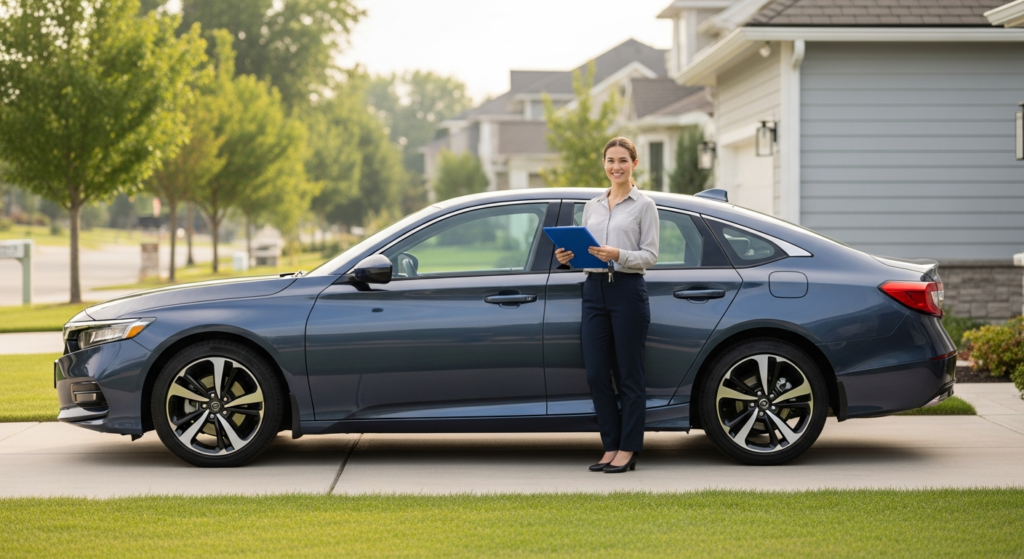
I’m opinionated about this because I’ve seen what works. Mid-size sedans and compact SUVs from rental fleets are your best bet. These are the bread-and-butter vehicles that rental companies buy in huge numbers.
Honda Civic, Toyota Corolla, Toyota Camry, Honda Accord—boring, right? That’s exactly why they’re perfect. Rental companies buy these because they’re reliable and cheap to maintain. Parts are everywhere. Every mechanic knows how to work on them. They hold value even after fleet service.
Compact SUVs like the Toyota RAV4, Honda CR-V, and Mazda CX-5 offer similar benefits with more space. These vehicles handle fleet duty without breaking a sweat.
My Top Fleet Vehicle Picks:
- Toyota Camry: Bulletproof reliability, cheap repairs, excellent resale
- Honda Accord: Similar to Camry, slightly sportier driving feel
- Toyota RAV4: Best compact SUV for reliability and value retention
- Honda CR-V: Great space, excellent reliability, comfortable ride
- Mazda CX-5: More upscale feel, still reliable, better driving dynamics
- Chevrolet Malibu: Underrated value, decent reliability, very cheap as fleet vehicle
Avoid performance cars, luxury brands, and trucks from rental fleets. A Mustang that was rented for weekend getaways has been driven hard. Luxury cars have expensive maintenance that gets deferred. Trucks from rental companies often saw rough use from contractors.
What to Avoid in the Fleet Market
Full-size trucks and cargo vans get worked. Hard. These aren’t weekend warriors—they’re hauling equipment and materials. The drivetrain takes a beating that passenger cars never see.
Luxury fleet vehicles present a different problem. A BMW 3-series ex-rental might look like a deal, but maintenance costs don’t decrease because it was a fleet car. You’re still paying BMW prices for parts and service. The discount isn’t worth the ongoing expense.
Sports cars and convertibles from rental fleets have been thrashed. People rent these cars specifically to drive them hard. Every spirited driver who ever wanted to “see what it can do” got their chance.
Any fleet vehicle with collision damage history is an immediate pass. Fleet companies repair cars to get them back in service, not to restore them to perfect condition. You’re buying someone else’s accident with a cheaper repair job.
Red Flag Fleet Vehicles:
- Sports cars (Mustang, Camaro, Challenger)
- Luxury brands (BMW, Mercedes, Audi, Cadillac)
- Full-size trucks with heavy-duty packages
- Cargo vans and work vehicles
- Vehicles with multiple owners in short timeframe
- Any vehicle with accident history
- High-performance trim levels
How to Find Fleet Vehicles for Sale
Rental car companies sell directly through their own used car lots. Enterprise Car Sales, Hertz Car Sales—these are real dealerships where you can walk in and buy. Everything on the lot is ex-rental. Prices are clearly marked. No haggling pressure, though you can still negotiate.
Dealership used car lots mix fleet vehicles into regular inventory. These cars often aren’t labeled as fleet vehicles unless you check the Carfax. Look for one-owner vehicles with high mileage in short timeframes—20,000 miles in one year suggests fleet use.
Online auctions like Manheim and ADESA are where dealers buy, but some are open to public buyers. You need to register and understand auction processes, but this is where you’ll find the absolute lowest prices.
Where to Search:
- Enterprise Car Sales locations (nationwide)
- Hertz Car Sales locations
- Major dealership used lots (check Carfax for fleet history)
- CarMax (carries many fleet vehicles)
- AutoTrader with “rental” or “fleet” in description
- Government surplus auctions (GSA Auctions)
- Online platforms like Carvana and Vroom
The key is getting the vehicle history report before you buy. Carfax and AutoFax will clearly show if a car was fleet-owned. Look for consistent maintenance records every few thousand miles.
Inspecting a Fleet Vehicle Before Purchase
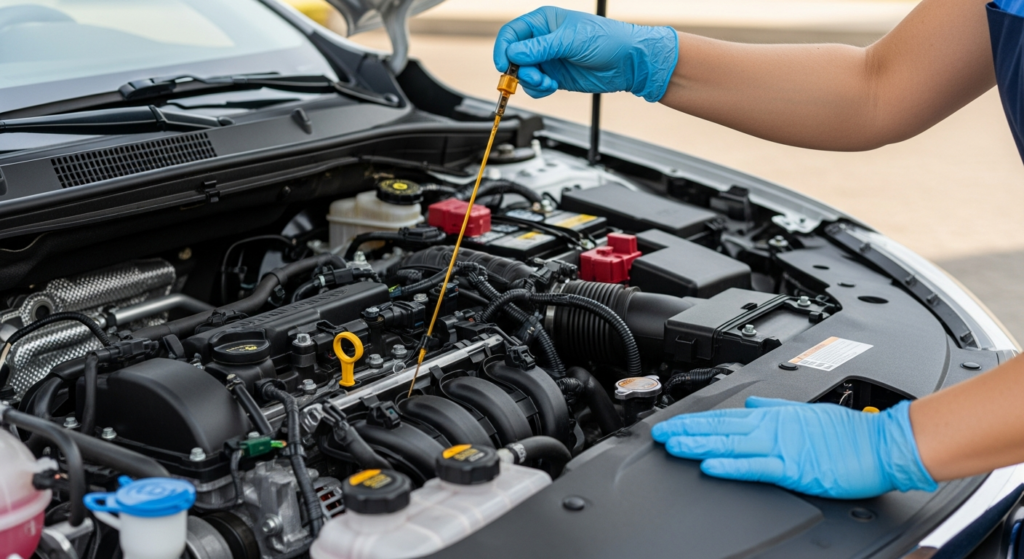
I don’t care how good the deal looks—you inspect the car or walk away. Start with the basics that apply to any used car, then add fleet-specific checks.
Interior wear tells you how the car was actually used. Check the driver’s seat bolster—heavy wear means lots of entries and exits. Look at the steering wheel leather or plastic—excessive wear suggests high mileage use. Cup holders and center console should show normal wear, not damage.
Under the hood, look for oil leaks, worn belts, and check all fluid levels. Fleet maintenance is usually good, but sometimes cars get sold right before a major service is due. Pull the dipstick—oil should be clean and at proper level.
Test drive matters more for fleet vehicles. Listen for any unusual noises. Test the brakes hard—fleet cars go through brakes faster. Check how the transmission shifts under acceleration. Any hesitation or hard shifting is a warning sign.
Fleet Vehicle Inspection Checklist:
- Service records: Complete history with regular intervals
- Title status: Clean title, no salvage or rebuilt
- Interior condition: Acceptable wear, no damage
- Exterior: Minor dings okay, major damage is not
- Tire tread: All four matching, minimum 40% tread
- Brake feel: Firm pedal, no vibration or noise
- Engine noise: No knocking, ticking, or unusual sounds
- Transmission: Smooth shifts, no slipping
- Warning lights: None illuminated on dash
- Test drive: 20+ minutes including highway speeds
If possible, get a pre-purchase inspection from an independent mechanic. It costs $100-150 but can save you thousands by catching problems the seller won’t disclose.
The Warranty Situation with Fleet Vehicles
Here’s where it gets interesting. Factory warranties transfer to new owners based on time and mileage from the original sale date. A two-year-old ex-rental with 30,000 miles still has whatever factory warranty remains.
Most manufacturers offer 3-year/36,000-mile basic warranties and 5-year/60,000-mile powertrain warranties. If you buy a fleet vehicle at 24 months and 35,000 miles, you have one year of powertrain warranty left. That’s real coverage.
However, some fleet vehicles are sold “as-is” with no warranty. Auction purchases especially fall into this category. This is why the inspection process is critical.
Warranty Coverage by Source:
| Purchase Source | Warranty Type | Typical Coverage |
|---|---|---|
| Enterprise/Hertz Sales | Limited warranty | 12 months/12,000 miles |
| Franchise Dealership | Varies | 30-90 days or longer |
| CarMax | MaxCare available | Optional extended warranty |
| Private Party Fleet | None | As-is purchase |
| Auction Purchase | None | As-is purchase |
You can buy extended warranties after purchase, but do the math carefully. Most extended warranties aren’t worth the cost unless you’re buying a vehicle known for expensive repairs.
Negotiating Fleet Vehicle Prices
Rental car company lots have less negotiating room than traditional dealerships. Their prices are already discounted, and they rely on volume sales. You can typically negotiate $500-1,000 off the listed price, maybe $1,500 on more expensive vehicles.
Traditional dealerships with fleet vehicles in their used inventory have more flexibility. They bought these cars at auction and added their markup. You have normal negotiating room here—10-15% off the asking price isn’t unreasonable if you’re prepared to walk away.
The best leverage? Cash or pre-approved financing. Dealers make money on financing, so removing that incentive means they need to be sharper on price to make the sale worthwhile.
Negotiation Strategy:
- Research comparable vehicles in your area before shopping
- Get pre-approved for financing from your bank or credit union
- Point out any cosmetic flaws or wear as negotiating points
- Reference other similar vehicles at lower prices
- Be willing to walk away if numbers don’t work
- Consider end-of-month purchases when dealers want to hit quotas
Remember that fleet vehicles are already discounted. You’re not going to get private party pricing from a lot with overhead costs. Be realistic about what discount is reasonable.
Financing and Insurance Considerations
Banks and credit unions treat fleet vehicles like any other used car for financing purposes. Your interest rate depends on your credit score, not the car’s previous fleet status. The age and mileage affect loan terms—most lenders won’t finance vehicles over 10 years old or with more than 100,000 miles.
Insurance companies don’t penalize fleet vehicles either. Your rate is based on the car’s make, model, year, and your driving record. Whether it was a rental car or privately owned doesn’t matter to them.
One advantage: lower insured value means lower premiums. Since fleet vehicles cost less to purchase, you’re insuring a lower dollar amount, which typically reduces your comprehensive and collision coverage costs.
Typical Financing Terms for Fleet Vehicles:
| Vehicle Age | Mileage | Typical Loan Term | Rate Premium vs. New |
|---|---|---|---|
| 1-2 years | Under 30,000 | 60-72 months | 1-2% higher |
| 2-3 years | 30,000-50,000 | 48-60 months | 2-3% higher |
| 3-5 years | 50,000-80,000 | 36-48 months | 3-4% higher |
Long-Term Ownership Experience
I’ve owned fleet vehicles for years, and they’ve been reliable. My 2019 Honda Accord ex-rental has 95,000 miles now. I bought it with 28,000 miles three years ago. Total repairs beyond routine maintenance? One wheel bearing at 75,000 miles. That’s it.
The cosmetic issues I mentioned earlier? They don’t get worse. The scratches don’t spread. The worn seat doesn’t continue deteriorating faster than any other used car seat. You’re buying a car with some existing wear, but it’s not going to fall apart.
Resale value is the only real downside. When you go to sell, buyers will see the fleet history on Carfax. Some will walk away based on that alone. You’ll typically get 5-10% less than a comparable non-fleet vehicle. But since you paid 20-30% less upfront, you’re still ahead financially.
The maintenance schedule going forward is identical to any other car. Follow the manufacturer’s recommended service intervals. Use quality parts. The car doesn’t care that it used to be a rental.
My Actual 5-Year Ownership Costs (2019 Honda Accord Ex-Rental):
- Purchase price: $16,500 (67,000 miles at time of writing, bought at 28,000)
- Routine maintenance: $2,800 (oil changes, tires, brakes, filters)
- Repairs: $380 (wheel bearing)
- Insurance: $4,200 (comprehensive and collision)
- Total cost: $23,880
- Comparable non-fleet purchase: $22,000
- Net savings: $3,120 (after accounting for lower resale)
Common Problems That Actually Happen
Let me be honest about the issues I’ve encountered and heard about from other buyers. These aren’t dealbreakers, but you should know they exist.
Rental cars sometimes have interior damage that’s been patched up. I’ve seen seat cushions with cheap covers hiding cigarette burns. Scratched trim pieces painted over rather than replaced. Missing or replaced interior panels that don’t quite match.
Keys are often aftermarket replacements rather than factory originals. This matters for cars with proximity keys or integrated key fobs. Replacing these can cost $200-400 if you need a spare.
Some fleet vehicles have had multiple windshield replacements due to road debris. This isn’t necessarily bad, but cheap replacement windshields can have optical distortions or poor water beading.
Tire quality varies significantly. Fleet companies often install the cheapest tires that meet basic safety standards. You might need to budget for tire replacement sooner than expected.
Problems by Frequency:
- Interior cosmetic damage (60% of vehicles)
- Aftermarket key fobs (40% of vehicles)
- Mismatched tires or cheap replacements (35% of vehicles)
- Minor unreported cosmetic repairs (25% of vehicles)
- Deferred maintenance items (15% of vehicles)
- Mechanical issues within first year (8% of vehicles)
None of these are catastrophic. They’re just the reality of buying a vehicle that was used for business purposes rather than personal transportation.
Documents You Must Get When Buying
Never walk away without complete service records. This is non-negotiable for fleet vehicles. You need proof that maintenance was actually performed on schedule.
The title should be clean—no salvage, rebuilt, or flood damage designations. Check that the VIN on the title matches the VIN on the car and the VIN on the service records.
Get a vehicle history report from both Carfax and AutoFax if possible. Sometimes one service catches records the other missed. Look for consistent mileage progression with no gaps or discrepancies.
If buying from a dealership, get the buyer’s guide that’s required to be displayed on used cars. This tells you what warranty coverage exists and what’s excluded.
Essential Documents:
- Clean title in seller’s name
- Complete service history records
- Carfax or AutoFax vehicle history report
- Buyer’s guide (from dealer sales)
- Warranty information (if applicable)
- Owner’s manual and spare key
- Bill of sale with accurate mileage and date
Keep copies of everything. When you go to sell the car years later, having complete documentation from your purchase helps establish the car’s history and value.
State-Specific Considerations
Some states have specific laws about fleet vehicle sales. California requires disclosure if a vehicle was used as a rental car. New York has strict lemon laws that can apply to used car sales from dealers.
Registration and title fees vary by state. Some states charge based on vehicle value, which works in your favor with cheaper fleet vehicles. Others charge flat fees regardless of price.
Emissions requirements matter if you’re buying an out-of-state fleet vehicle. California and several northeastern states have strict emissions standards. A fleet vehicle from another state might not pass inspection in your state.
Sales tax is based on purchase price, so the discount you got on a fleet vehicle saves you money here too. In states with 7-8% sales tax, you’re saving hundreds of dollars in tax alone compared to buying a more expensive non-fleet vehicle.
The Fleet Vehicle Buying Process Step by Step
Start by deciding what type of vehicle you need. Don’t get distracted by deals on cars that don’t fit your requirements. A cheap sedan doesn’t help if you need cargo space.
Research which models are commonly sold as fleet vehicles. Check Enterprise Car Sales and other fleet retailers to see what’s actually available in your market.
Set your budget including taxes, registration, and initial maintenance. Fleet vehicles might need tires or other deferred items shortly after purchase.
Visit multiple sources—rental car lots, dealerships, online retailers. Compare prices and conditions. Don’t jump on the first deal.
Get vehicle history reports before scheduling test drives. Don’t waste time on cars with accident history or title problems.
Test drive thoroughly. Spend at least 20 minutes driving, including highway speeds and stop-and-go traffic.
Get a pre-purchase inspection from an independent mechanic unless you’re mechanically knowledgeable yourself.
Negotiate based on actual condition and comparable prices, not emotion or pressure from the seller.
Get all documents in order before finalizing the purchase. Review everything carefully.
Complete the transaction and transfer title properly according to your state’s requirements.
Related Questions About Fleet Vehicles
Are ex-police cars good to buy?
Police cars are a separate category from typical fleet vehicles. They face harder use than rental cars—idling for hours, frequent hard acceleration and braking, rough road conditions. However, they receive excellent maintenance. I’d only buy an ex-police car if it was an administrative vehicle rather than a patrol car, and only if service records are pristine. The savings aren’t usually worth the extra wear.
Can I return a fleet vehicle if I find problems later?
Return policies depend entirely on where you bought the vehicle. Rental car company lots typically offer 7-day return policies. Traditional dealerships vary by state law—some states require dealers to offer short return windows, others allow “as-is” sales. Private party sales are final unless you can prove fraud. This is why inspection before purchase is critical.
Do fleet vehicles qualify for certified pre-owned programs?
Rarely. Most manufacturer CPO programs exclude fleet vehicles from eligibility. The criteria usually require single private ownership with complete dealer service history. Some dealerships offer their own certified programs that accept fleet vehicles, but these aren’t manufacturer-backed and offer less comprehensive coverage.
How can I tell if a used car was a fleet vehicle?
Check the Carfax or AutoFax report—it will show fleet registration. Look at service records for patterns of regular maintenance at specific mileage intervals, which suggests fleet service. The title might show a fleet company or rental agency as the previous owner. Some vehicles have small barcode stickers or fleet ID numbers that weren’t fully removed.
Final Thoughts on Fleet Vehicle Value
I’ve bought seven fleet vehicles over five years. Four are still in daily use by my family. None have had major mechanical problems. The money saved compared to buying equivalent non-fleet cars adds up to about $18,000 across all purchases.
The market perception of fleet vehicles creates an opportunity. People avoid them based on assumptions rather than reality. Modern cars are tough enough to handle rental duty without long-term damage. The maintenance records are better than most private party cars.
You’re making a financial decision, not an emotional one. Fleet vehicles aren’t collector cars or status symbols. They’re reliable transportation at below-market prices. If your ego can handle driving a former rental car, your wallet will thank you.
The process requires more research and inspection than buying from a private party who assures you they “babied” the car. But you’re getting documented maintenance history and predictable condition in exchange for some cosmetic wear.
Stop listening to outdated advice about fleet vehicles being junk. Look at the actual data—service records, inspection results, long-term reliability. Make decisions based on facts, not car-buying folklore. That’s how you find value in any market.